
Three Basic Thoughts on “Woke”
A case study in tradition and solidarity

Welcome to The Blackthorn Hedge. Nearing the end of my second arc of 24 letters here (this is number 45), I’ve decided to demonstrate how I’ve been laying groundwork for applications in the last two arcs by directly addressing a topic I’ve mentioned many times in passing: “woke.” This is still low-level work, a floor rather than a tower, but work done right takes time.
As always, I welcome all respectful comments, messages, and other engagement.

1. “Woke” is a word that is often and often intentionally used lazily.
“Woke” is a word that inspires strong responses just by itself, some of them loud and obvious but many of them more subtle. We could say that “a lot of ink has been spilled” over exactly what it means, what it should mean, how it should be used, and so on, but that cliché is getting out of date. A lot of bits have been flipped, a lot of gigahertz waves have been emanated, a lot of larynges and cochleae have vibrated, and a lot of neurons have spiked.
I want to open my letter with this sharp refusal of a common, inoffensive, yet lazy expression because the endless and too-often-embarrassing arguments about “woke” depend on a lot of half-thinking clichés to persist and recur. Normally a cliché like “a lot of ink has been spilled” seems harmless. It may irritate literary aesthetes with high standards, and they’re well-represented on Substack; more harm is done by lulling complacent readers into sleepwalking through a false dreamworld where they still live in a print-dominated media regime.
Clichés have a hypnotic abstract obviousness that inhibits attention to concrete reality. They seem “given,” but they aren’t, in exactly the sense that Sellars critiqued sharply in Empiricism and the Philosophy of Mind via “the myth of the given” and exactly the sense that Nietzsche meant when he called dogmatic truths “a mobile army of metaphors, metonyms, and anthropomorphisms—in short, a sum of human relations which have been enhanced, transposed, and embellished poetically and rhetorically, and which after long use seem firm, canonical, and obligatory to a people: truths are illusions about which one has forgotten that this is what they are; metaphors which are worn out and without sensuous power; coins which have lost their pictures and now matter only as metal, no longer as coins” (from On Truth and Lie in an Extra-Moral Sense).
The concrete realities are present, however, and the metaphors can be refreshed with new sensuous power; the “coins” can be re-stamped and the “illusions” can be reinterpreted back into genuine phenomena. Though nothing is simply “given” in experience, there is plenty worth taking from it. We can “wake from our dogmatic slumbers,” as Kant once described his own path to taking a leading role in Enlightenment critical philosophy. We can use reason to resolve the confusion of common opinions to acquire knowledge: what Aristotle called nous, endoxa, and episteme. Not exactly a new problem.
“Woke” is itself, first and foremost, a family of living traditions of application of this perennial metaphor: the metaphor of waking up from a shared dream or nightmare as a figure for breaking complacent assumptions and mental habits. Yet these living traditions, though first and most important, are often eclipsed, overshadowed, and talked over by contrary uses of the word.
Like unchecked counterfeit coinage will drive out genuine coins from a market (Gresham’s Law), shallower uses of a metaphor as a cliché will drive out deeper social uses of the metaphor. It’s common sense to be in the habit of quick, shallow interpretation – if you overthink these things you’ll seem plodding and stupid. Clever people want to see lightning wit and facility with social form regardless of substance.
So though I’m doing plodding work here, don’t think I’m advocating going out and eagerly “correcting” everyone else’s use of “woke” or “rectifying names.” There’s rarely any status or honor to win there. This is a case, like academic professors’ tardinesses and contemporary men’s fashion, where ostentatious laziness is typically the high status move. The people using “woke” lazily are benefitting by it. There is only a thin pretense that there are norms against that sort of laziness, and so it’s easy to intransigently ignore appeals to those norms.
Don’t bother with the appeals unless you’re in a special case. Bad faith about “woke” is endemic. Contra Hanlon’s razor, “never attribute to malice what could be attributed to stupidity,” use Augustine’s glue: “malice and ignorance are always inseparable.”
2. “Woke” has stood for several African-American traditions of vigilance.
Genealogies of “wokeness” often stay narrowly Anglophone and American. They point to African-American dialect as a source of “woke” for “awake” and then to movements like the pro-Lincoln Wide Awake movement of 1860 for the prior American political application of “awake.”
That genealogy of “woke” holds up to simple questions. However, just above, I’ve said that Kant was using “waking from dogmatic slumber” as a description for late-1700s Enlightenment and I recall that Nietzsche, a continent away from the Wide Awakes, had opened his 1886 Beyond Good and Evil with a preface declaring “we, whose task is wakefulness itself.” What, classical liberal Kant and based vitalist Nietzsche both using this metaphor? A woke right and a woke Enlightenment? In German, the words “wach” for awake, “Wachsamkeit” for wakefulness, and “aufgewacht” for woke might be interesting to trace as precursors and correlates.1
The picture becomes clearer if we go to Latin roots, where “wakefulness” is “vigilance.” Keeping vigil is staying awake, staying woke. Maybe all the Harry Potter Millennials “went woke” because they took Mad-Eye Moody’s advice, “constant vigilance!”, too seriously?
The fact is that wakefulness, memory, truth, and life have been symbolically tied together for millennia just like sleep, forgetting, falsehood, and death. They are bound by long-appreciated, transcendent analogies that can sustain many hours of meditation; they are found at the heart of religions from primordial shamanism’s mystic vigils and rebirths to the LessWrong Zizian cult with its bizarre ideas about putting half the brain sleep so the other half could be free.
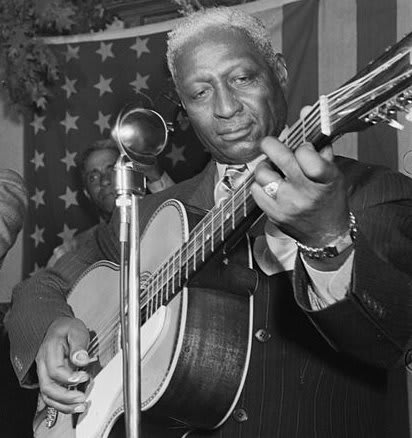
African Americans have had special memories to keep alive, memories of history that was suppressed in white society, and a special vigilance to practice, wariness against racial antagonism. It’s only natural they would create their own distinctive traditions of using the metaphor of wakefulness for these memories and vigilances. Given the distinctive practices, they deserved a distinctive name: staying woke. This use is attested already in a radio broadcast from 1938, used by the bluesman Lead Belly.
Traditions of special vigilance are not always welcome to their neighbors, and Black vigilance could be particularly provocative. Marcus Garvey and Malcolm X were certainly polarizing leaders, and Martin Luther King, Jr.’s warnings about white moderates also remain polarizing.
In the United States, marginal traditions of vigilance are typically discouraged using accusations of paranoia and conspiratorial thinking. Never mind that the Ku Klux Klan existed as a network of anti-Black conspiracies; never mind that the FBI conspired to surveil, discredit and humiliate Black leaders; never mind that at the same time the FBI and KKK were conspiring against one another as well! The American establishment discourages conspiracy theory as an irrational, ungrounded expression of paranoia. The “woke” traditions resisted this discouragement and kept memories of genuine threats alive. In resisting the external discouragement and maintaining internal transparency to “passing the word” about persecutions, they practiced distinctive solidarity.
The “woke” label has since spread widely and found many other uses. Some in the Black traditions of vigilance have seen this as a dangerous development. From the best book on the subject of “woke” that I’ve read, Musa al-Gharbi’s We Have Never Been Woke,2 is this well-grounded expression of a wariness inconvenient for some of his academic neighbors:
This book takes part in a tradition of Black critique—running from W.E.B. Du Bois to the present—highlighting how liberals exploit social justice advocacy to make themselves feel good, but ultimately offer up little more than symbolic gestures and platitudes to redress the material harms they decry (and often exacerbate). Up to now, this corpus of social analysis has been largely disconnected from research on the sociology of elites, the rise of the knowledge economy, or science, knowledge, and technology studies. Moreover, its critiques of symbolic politics have generally been nonreflexive: white liberals are subject to intense scrutiny while nonwhites of any persuasion are largely excluded from analysis. For our purposes, this is a problem because an ever-growing share of contemporary symbolic capitalists identify as something other than cisgender heterosexual able-bodied neurotypical white men. And symbolic capitalists are constantly inventing new forms of marginalization and novel ways to lay claim to existing minoritized identities. (Al-Gharbi, We Have Never Been Woke, p. 14)
“Symbolic capitalist” more or less means “managerial class” here, though I recommend reading the book for the exact description.
These traditions are deeper than the “woke” label, are richer than generic “wokeness,” and will persist whatever happens to those labels. They’ll persist as long as being Black in America motivates special vigilance.
3. “Woke” is a word used to make and mark group boundaries.
“Woke” can provoke a strong response for many reasons today, but one of the simplest is just its grammar: it’s immediately recognizable as African-American dialect. It sounds wrong in other American dialects: it sounds grating and false.
For some number of listeners and readers, it literally hurts to hear or read grating dialect. People’s senses of grammatical correctness are not just a matter of cerebral persnicketiness, but also embodied habit. Just like Italians talk with their hands, most people listen and read with facial tensions and neck tensions. Parsing too many “wrongly constructed” sentences leads to literal headaches; teachers and editors are not joking when they say that correcting bad writing gives them headaches. Same with people complaining about headaches when parsing good writing in unfamiliar dialect, like in Faulkner or Joyce.
These pains aren’t universal or inevitable, but they’re common enough, and they’re part of why distinct dialect speakers often stay socially separated from one another rather than integrating. Once they’ve begun separating, they sometimes lean into it. One way to lean into it is to intentionally amp up the incompatibilities between the dialects, trying to make one’s dialect maximally opaque and off-putting to outsiders, like old London thieves’ slang or like whatever the Zoomers and Alphas have moved onto since “6 7.” Another is to become more and more sensitive to the existing differences, becoming irritable and intolerant of even minor “errors,” as in some of the old Anglo aristocracy.
Until recently, “woke” was a word that would usually have been embarrassing to say as a white person. Occasionally Beats and Hippies would use it, as transgressive exceptions proving the rule. It was a symbol specially for African Americans and their closest allies until a specific group of activists, Black Lives Matter, chose to build a bigger movement and broadly expand the use of “woke” 2013–2014. As part of the larger Social Justice movement, BLM had a favorable cultural and economic environment and new patterns of solidarity to encourage non-Black allies to use their language, including “woke,” and to spurn prior pieties, such as standard grammar, as prejudices.
This was deliberately provocative, and it tied into many other active campaigns of cultural provocation that the Social Justice movement (pejoratively the Social Justice Warriors) was pursuing at the time. The striking changes in language now commonly referred to as the “Great Awokening” began in 2011, well before “woke” itself became a focal term.
The changes in speech patterns were extensive. There were many changed norms for referring to gender as well, not just the past tense, and there were changes in tone as well as diction and grammar. One detail that often surprised me was a sharp increase in vocal fry and snarky twang in professional settings, tied to the normalization of gay camp culture. Many of the changes were provocative and received pushback in various outrage cycles, but “woke” became the focal marker of the movement for a couple of ugly reasons.
First, BLM had not spoken for all Black Americans, and many were in fact quite angry at BLM’s “defund the police” activism. As we’ve already seen with al-Gharbi, not all of the members of the traditions of Black vigilance felt well-represented by the Social Justice movement, and so BLM’s use of “woke” was in some ways an overextension or usurpation of the charisma of those traditions. More of those figures than just al-Gharbi have spoken up against the Social Justice movement, and more importantly, more have worked quietly to deny the Social Justice movement the charisma of the older vigilance movements.
Crucially, given their long practice, some of these vigilance movements knew how to signal to the public and to some private allies that they considered the new “woke” a hollow appropriation of their traditions. They gave others sharp, needling rhetoric to puncture what they thought of as the pretenses of the Social Justice movement – clever little ways of tricking Social Justice people into appearing like they weren’t really listening or understanding when they tried to stand for Black Americans.
Once those secrets were out, the right had a field day baiting white Social Justice “allies” into acting embarrassing in the name of “wokeness.” The Social Justice movement could have in principle headed this off by recognizing the problem and better representing the Blacks who opposed their activism, but they didn’t. Instead, it became apparent to the public3 that they stood only for a particular activist minority, and not even the savviest and most vigilant minority. Instead, the right made it look like the queerest and most narcissistic minority. It’s ugly to say it so flatly, but this is the fact: they succeeded in popularizing a counter-narrative that Social Justice was “woke” and that that meant a bunch of conformist liberal white women and rich perverts fetishizing queer Blacks, without any substantive commitment to understanding poverty or the working class.4
Because of this dynamic, calling Social Justice “woke” as an attack became an important marker of group belonging on the right. Being “anti-woke” was important, and using “woke” to mean all of Social Justice rather than the specific Black vigilance traditions was also important. It seemed to force the Social Justice movement onto its weakest ground – its apparent failures to concretely improve living conditions for typical African Americans, apparent failures that appear responsible for a small but meaningful swing of their votes to Donald Trump.
In principle, it might be possible to contest the right’s use of “woke” this way as a lazy, false usage. In some Social Justice groups, making that contest is itself an important sign of belonging – this creates yet more meanings of “woke,” each one associated with a new defensive line.
However, I don’t make these contests, and that’s why I began with #1: “Woke” is a word that is often and often intentionally used lazily. In practice, I find these contests are hopeless because that sort of laziness is too normal. People need their slack. I choose not to belong to those Social Justice groups on those grounds. I do support certain Black vigilance traditions, but “woke” seems cooked to me. At least in public talk, it’s gotten too fouled up through conflicting usages. I’m not going to describe myself as “woke” or defend any generic “woke,” and I’ll accept the social sortings that implies.
All said
I’ve written all the above straight through without direct links to my prior letters, hoping it is interesting and clear without that background. Nonetheless, regular readers will have picked up on common themes and references. In this conclusion I’ll make several explicit, and I hope it shows how I’ve been “putting down roots” for the Hedge here, as I put it in “Motte and Bailey; Hedge and Field.”
I’ll be particularly explicit for the opening. Here is the first section, paragraph by paragraph.
First, this stimulus-response thinking was the subject of “The Internet as a Hive Mind.”
The ways technologically-specific ideologies permeate common expression was the subject of “Fracking the Collective Unconscious.”
The problems of quasi-hypnotic entrainment into bad mental habits was “Common Sense Against Mind Viruses.”
Refreshing worn out metaphors via concrete referents was a subject of both “Digesting Tradition” and “Grounding Tradition.”
The “living traditions” that “woke” stands for first and foremost are phyletic traditions in the sense of “Differentiating Traditions.”
The way some communities prioritize shallow, fast communication was in “Varieties of Solidarity.”
The next to last paragraph was an application of “How to Assert.”
Only the last paragraph of this section felt like it was an original idea for the Hedge, and it will probably be a future letter: “Hanlon’s Razor; Augustine’s Glue.”
I didn’t plan it out in this form, but in retrospect it’s a clean sequence. In the second section, I was drawing most on “Differentiating Traditions,” “From Swarm to Solidarity,” and “Five Kinds of Conspiracy Theory.” In the third section, “Etics, Emics, and Emetics,” “Substrates for Solidarity,” and “Overton Window; Overton Archipelago.”
I don’t intend all my readers to read every one of these and get every linkage! That would be a vain nightmare. I’m not writing my mundane prose answer to Ezra Pound’s Cantos here. Instead, what I’m aiming to do is make sure that the letters support one another sufficiently that it becomes easier and easier for me to write each next one and easier and easier for each of you to read each next one.
There is a lot of conceptual reclamation work to do in the craters of the last rounds of the culture war. There’s been a lot of struggle and a lot of vigilance that has left damage and exhaustion in its wake. What I’ve become focused on personally, now, is how to sleep well at night between work shifts – how to become comfortable among the many traditions, solidarities, and deliberative systems currently active in defining our global political situation – how to relax into them at least in between rounds of work to improve them and my relations to them.
This Hedge project is one way I’m establishing some new comfort for myself in public, and I hope it can provide you readers some comfort as well.

In the German Google Ngram data, uses of “wach” and “aufgewacht” rise sharply through the years 2000–2018, very similar to “woke” in English, while “Wachsamkeit” declines from 1840 and never recovers but does stabilize around 1950.
“Best” does not mean I agree with all of it. I’d like to review it here properly someday, but it may not be soon.
Note carefully that “became apparent” does not imply “was true.” This was an appearance whether or not it corresponded to reality. Whether it corresponded to reality or not is an issue I strictly refuse to engage with in public because I see too little public good faith to justify public deliberation of the issue.
Here, again, I want to be clear: “popularizing” does not imply that it was true or that it was uniformly believed. My threshold for viewing a “popularization” as successful is that it can reach an audience of about 5-10% of the total engaged population, a key threshold for minority influence.
Interesting thoughts. The contemporary use of the term “woke” seems to me to have less to do with “being vigilant” (in the sense of “the price of freedom is eternal vigilance”) and more to do with “having awakened from false consciousness” in a pseudo-Marxian or quasi-religious sense (the left-wing equivalent of being red-pilled on the right). The more “neutral” term “social justice” makes it explicit: there is a rejection of liberal notions of procedural justice in favour of a different (in my view incoherent) approach to politics. Whatever the etymology of the word “woke”, I think overidentification of the phenomenon with Black Americans is unhelpful – the same dynamics can be seen among feminists and queer rights activists: once legal equality was achieved, activists focused their energy on driving social change in ways that often turned out to be counterproductive.
I'm a little surprised by this "grammatically grating" thing.
"Woke" is a legitimate past-tense verb ("he woke me"), and it common to freely regard past-tense verbs as adjectives, so I don't see why "woke" should be grating in any American dialect. "I am woke" should be like "I am pleased" or "I am insulted" or "I am surprised": in the state of having been X.
I contend that people don't find the word grating for grammatical reasons but instead that what they find grating is the chutzpah of someone claiming to be awakened, enlightened. If I claim to be enlightened, that's a bit grating (unless you buy it). Isn't that really what's happening here?