
Notes on Substack Pest Ecology
Swampy thoughts on getting back to work here

Welcome to The Blackthorn Hedge. Today’s letter is a shorter, more concrete letter than usual. It could be read as an application of any number of my prior more abstract letters, particularly the last one on chain reactions and percolation theory, and also “Common Sense Against Mind Viruses,” but it should also stand apart from them just as well. It’s a work-in-progress letter like “Motte and Bailey; Hedge and Field” or “Laying the Hedge: Arc 1.”
As always, I welcome all respectful comments, messages, and other engagement.
My initial plan for today’s letter had been to write up an application of lessons from David Gilmore’s Manhood in the Making to computer games – thoughts on how and why those games are important proving grounds for young men (and where and when). Defending Feminism recommended the book a few months ago and ever since finishing, I’ve been looking for a proper time to review it and recommend it here. I didn’t intend “Trump as an Anomaly of Feminist ‘Patriarchy’ Paradigms” to stand so long as my main letter on gender politics!
I immediately recommended Manhood in the Making in private Signal chats. I think one of my old lifting friends has already started reading it. I move more comfortably in those chats than on Notes here; I don’t have the hang of Substack.
The longer I tried to work on that draft, the more I recognized a familiar feeling. One like I was leaving crumbs… one like I had spilled a few drops of soup. A feeling like I was going to start drawing ants any minute.
I don’t often talk like it, but I was born a Florida Man, and I have some odd Florida habits. One is that you never, ever risk food dirt around the house unless you want ants. You also wipe up any water immediately unless you want mildew. In the swampy panhandle where I grew up, things stay clean and stay dry or they start growing legs or blooming. I feel the same way about writing online.
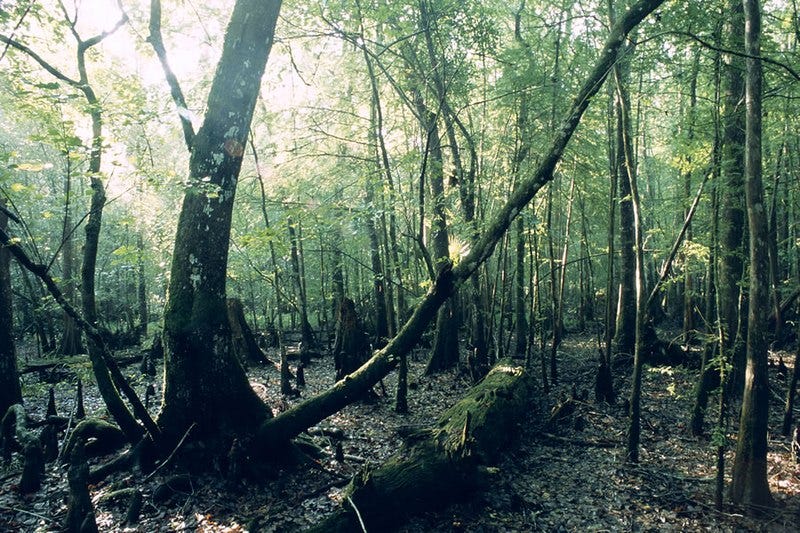

Whenever I mention a controversial name, or whenever I put a hint of authority or sexuality into a note or letter, I expect some unwelcome attention. Not exactly trolls, just unpleasant people; many are helplessly and fecklessly sincere. They typically believe they’re doing the right thing, and sometimes they are doing the right thing – in the wrong place or at the wrong time.
This is a commonplace of conversation about the Internet in any group I’ve been in. Everyone agrees there’s a lot of rude garbage, although they disagree about what to do about it. Learn to love it, maybe. Become one with the rude garbage, even. Or learn to crush it. Learn to take out the trash and suffer no fools. Not that they all agree on who the fools or the trash are… and one group’s “taking out the trash” is another’s “being rude garbage.”
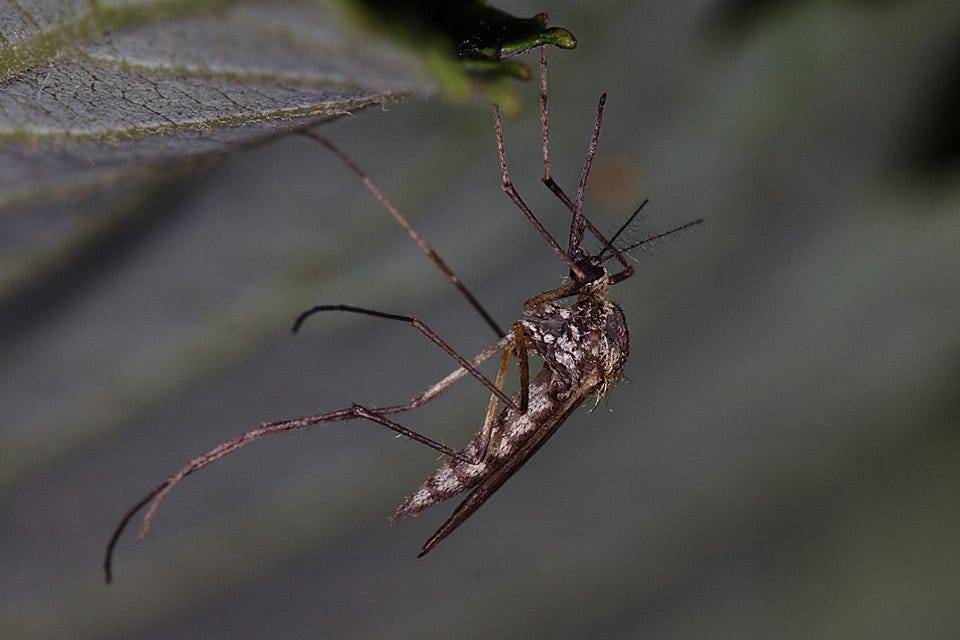
Technically, ants are in fact cleaning up your crumbs when you leave them sitting out. The spiders in your house really are just there to eat some of the other bugs they think you’ve already been making room for. When people jump on things I say online for sounding like they might encourage “the woke” or might encourage “the fascists,” I can’t really deny that they’re doing what they consider legitimate cleaning work.
There’s an overwhelming amount happening online, and there are a lot of genuinely slippery slopes when it comes to social resources and social norms. People do need to be actively managing their online social spaces at all times if they want to keep them as they are or to get more of what they want. It’s half of why it’s so compelling and fun; it’s a major part of how we manage to spend our six hours a day on our phones.
Recently, I’ve been making do on Substack by mostly staying quiet on Notes and writing long, abstract letters that don’t invite rude interaction.
In part, I’m killing time. From other public Internet experience, I’ve seen that just giving your account a few more months of seniority or a couple hundred more posts or followers can get people to treat you very differently. It might not be the pests that treat you differently. They don’t pay so much attention to broader social cues… that’s their problem. It’s more often that an established account, one well-positioned to deal with the pests, will take more notice when they’re bothering a long-time subscriber or commenter than when they’re bothering someone who just showed up.
Becoming a known quantity matters, and there aren’t good shortcuts. I could use my real name instead of a pseudonym, but that would tie me to my offline social networks and one of my goals here is to put down new roots that are independent of prior networks. I could spend more time posting pest-bait and then dealing with the pests forcefully to create a reputation, but that risks alienating people I probably shouldn’t and it would require time that I think is better spent on the letters. I could sign on with some community with sharply enforced standards that recruits newbies by protecting them, but that would also probably alienate people I shouldn’t by committing me to an exclusive group.
So for now, I’m mostly keeping my head down and avoiding some social spaces that I know are especially dangerous for me.


The biggest danger, with ants, is that you’ll get angry enough at them to go kick over one of their anthills. They can make your kitchen or bathroom disgusting without posing any real danger. If you hit their kitchens and bathrooms, it’s war. And they do sometimes (ok, very rarely) kill people, down in Florida.
For me, the places where I’m tempted to kick the anthills most are in utilitarian philosophy, Bayesian probability, and machine learning. It’s worst when they’re all together. If it hasn’t seemed to make sense why I don’t engage more with LessWrong-style Rationalists here on Substack, despite my scientific background, this is a big part of why.
My experience has been that they’re just not nice to talk to, as a group, unless you’re ready to become one of them or you already have a few thousand subscribers and a long sequence of publicly-available prior writings to explain yourself. They may act polite and curious at first, but they also expect conformity: they’re used to making arguments they believe have normative force, and if you don’t respect the normative forces of their arguments then you don’t belong in their spaces. At best, you’re written off as an academic or a continental philosopher or some other kind of person “who trusts books no one else here will read.”
I do like many of them individually, and some are close friends! Still, I don’t like some pests among them, and when I’m pestered, I’ve learned better than to fight – that just kicks the hill. If I don’t want to be pestered, for now I need to avoid engaging. Later on I’ll devote some time to making myself more legible to them and become a decent online neighbor.
The Substack algorithm has been making it feel surprisingly difficult to be a good neighbor. I’m not sure any other platform’s algorithm wouldn’t, but Substack’s discovery focus seems to put a particularly high priority on bridging between certain groups that would themselves prefer to keep separate. When one person in a community forms a bridging link to another community, the algorithm seeks to make more bridges.
This can turn building bridges into being a bad neighbor. That’s also common offline, of course – if you “invite dangerous people into your neighborhood” then you’ll be considered a bad neighbor – but on Substack there aren’t more options than “inviting people into your neighborhood” if you want to be linked to them. There’s no equivalent of a less-intimate “meet at a pub or park” option, something like a “soft follow” or “discreetly subscribe” option.
You have one level of intimacy here, one kind of space. You can choose for it to be suburb level, park level, or pub row level, but that’s your choice. You don’t get to separate your residential community from your other social communities. If you try to be a member of both a pub row and a suburban neighborhood, your other suburb-style neighbors will also have to hear the music blasting from pub row.
This is something I don’t know how to solve, and I’d appreciate any insights or suggestions on how to deal with it. In the private groupchats I’m used to, each space is automatically insulated. There are no automatic transfers of material between the feeds.
For now, my temporary compromise here is to skip “likes” and “subscribes” for stuff that I expect to be too rowdy for my broader intended audience and to encourage others not to subscribe to me or “like” my stuff if my own likes and follows are still too rowdy for them. That seems to be the simplest way to work around the algorithm, but I’m not actually sure it’s working. I’m not sure that the separation is effective.
_(4876033285).jpg)
Another issue I’m unsure how to handle is interaction across the internal stratification of communities. If I connect myself to some ironic account with genuine wit, say, the algorithm can’t tell between their clever humor and their epigones’ clumsy imitations. Neither can the epigones, and it would be rude to call anyone an unworthy imitator to their face to discourage them… if that would even discourage them, rather than driving them to redouble their ambitions.
Maybe I’ll get a ton of subscribers in a year and take the safety off, tell you all what I really think about all the third-rate Traylen imitators here. That’s not really what I think, though; I’m not in fact holding that back. That carnival looks fun for everyone involved. It has not been a place for me, but that’s just because I play around in different ways. The stratification is much more genuinely a problem for me in the analytic philosophy area and in political areas.
This is only in part a forward problem: that if I interact with someone I may be pestered by those in their audience. It’s also a reverse problem: that others following those I interact with may feel pestered by me. The angriest comments I’ve gotten here so far have come from third parties to my interactions with Dan Williams and John Ganz. In those cases, I had come off as an annoying pest; more than once as a lazy postmodernist and more than once as an apologist for quasi-Stalinist authoritarianism.
This one is more urgent to me insofar as it’s also been becoming a problem in some of my private communities. Some of the groupchats need to split and/or add some new explicit level structure.
At the beginning of this letter, I said authority and sexuality were particularly tricky topics to introduce.
I’ve bitten the bullet on talking about authority, even though it draws fire. Even when what I say gets me alternately mislabeled as a neoliberal, postmodernist, fascist, or Stalinist, it’s worth it to me: it makes gradual progress in forming a fair public reputation. I was writing about that in my very first letter here, “How to Assert,” flipping Paul Graham’s “How to Disagree” on its head: I respect ad hominem attacks and the people who make them.
I don’t dismiss it all as “tribalism.” I try to interpret it as solidarity instead. People want to know who belongs in their conversations and they have legitimate interests in labeling other people to limit the effects of their harmful speech. Legal “free speech” means defamation and protected threats must be handled informally with social pressure rather than state pressure. Solidarity labels are entirely appropriate instruments for directing social pressure.
That said, I haven’t found a way to handle the heat and the mislabeling that comes from talking about sexuality yet. There, reputations don’t seem to form fairly on any short timescale. And it doesn’t seem to be a partisan problem. It seems that on all sides, at every level, there’s simply been too much public and private dishonesty around sex for any good nation-spanning webs of trust about sex to survive the decades after the 1960s Sexual Revolution. (I talk about this often with Lydia Laurenson.)
I had been considering writing extensively about men and women and relationships in the next (the third) 24-letter arc of The Blackthorn Hedge, but I’ve decided against it. I’ll probably write two or three pieces on the topic in that arc – a Manhood in the Making letter is still in the queue – but no more than that. Instead, I’ll focus on trust issues more generally. If that works, it may build a pest-repellent base for talking about sex and gender in the fourth arc.
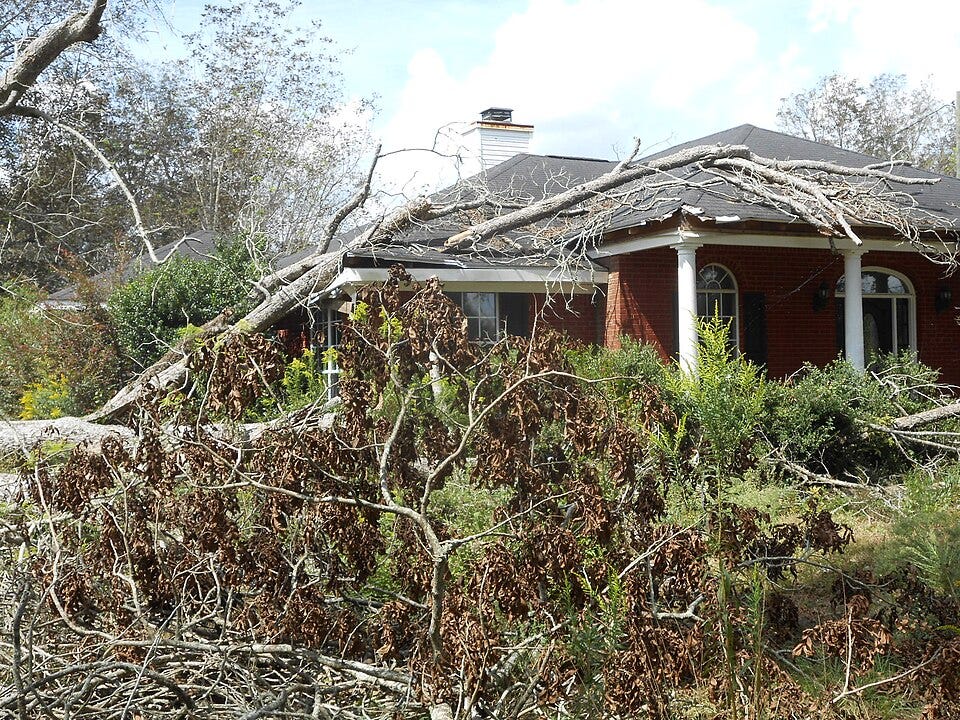

Florida was truly a swamp and filled with pests, where I grew up. Social media platforms aren’t as bad. No one here has literally bitten me or stung me… but that is about how low my bar is. We had a fair amount of gang violence and some creepy local cult activity, and those are not hard to see online as well.
There are plenty of utopian online social projects that intend to wipe out all bad behavior of certain kinds, say “irrationalities” or “tribalisms,” and which are no more realistic than fully paving the Everglades. I’m not aiming to do any of that here and never have been. I’ve seen the flood insurance rates. I’d rather be a seller of mosquito nets and good swamp boots, metaphorically.
My father still is in Florida, but he worries constantly about sea level rise for future generations, and he’s glad I’ve left. I think I felt almost the same way he does about sea level rise about the early years of Facebook, when I first went offline and started betting my life against early-generation social media. Whether it was disinformation, harassment, simple vulgarity, or screen or validation addiction, I saw something dangerous rising and I wanted out. Substack is social media, too, and sometimes swampy, but it seems deliberately designed for resilience against the floods.
What I’m worried about here isn’t those floods, then, but just whether I can find a good way to live and fit in. Today, I’ve been thinking about pests: how to attract fewer and how to be less of one myself.

May write an extended response to this (possibly as a Note, lol). I think we share many values yet have wildly different dispositions, and so our experiences here (never mind why we are here in the first place) are quite different.
I checked out your substack. Good writing, interesting viewpoints, but contributes to my subscription fatigue. I hope to see more of your posts. Just can't devote an hour to each one. Please accept my humble apology for not subscribing. I almost did.